
I often need to measure something quickly, usually at the exact moment I realize my ruler is nowhere nearby. Recently, I was checking whether a storage bin would fit on a shelf, and instead of guessing, I relied on my mental references for things that are 7 inches long. That estimate turned out to be accurate enough to make the decision without tools.
Seven inches is a surprisingly common size. It sits in a practical middle ground, longer than pocket items but shorter than most office paper. Because of that balance, manufacturers use this dimension frequently across household goods, tools, electronics, and even media formats. Once you learn to recognize it, this measurement starts appearing everywhere in daily life.
This guide brings together the most reliable objects, visual tricks, and category-based examples I personally use to estimate seven inches accurately, even when I am nowhere near a measuring tape.
💡 Key Takeaways:
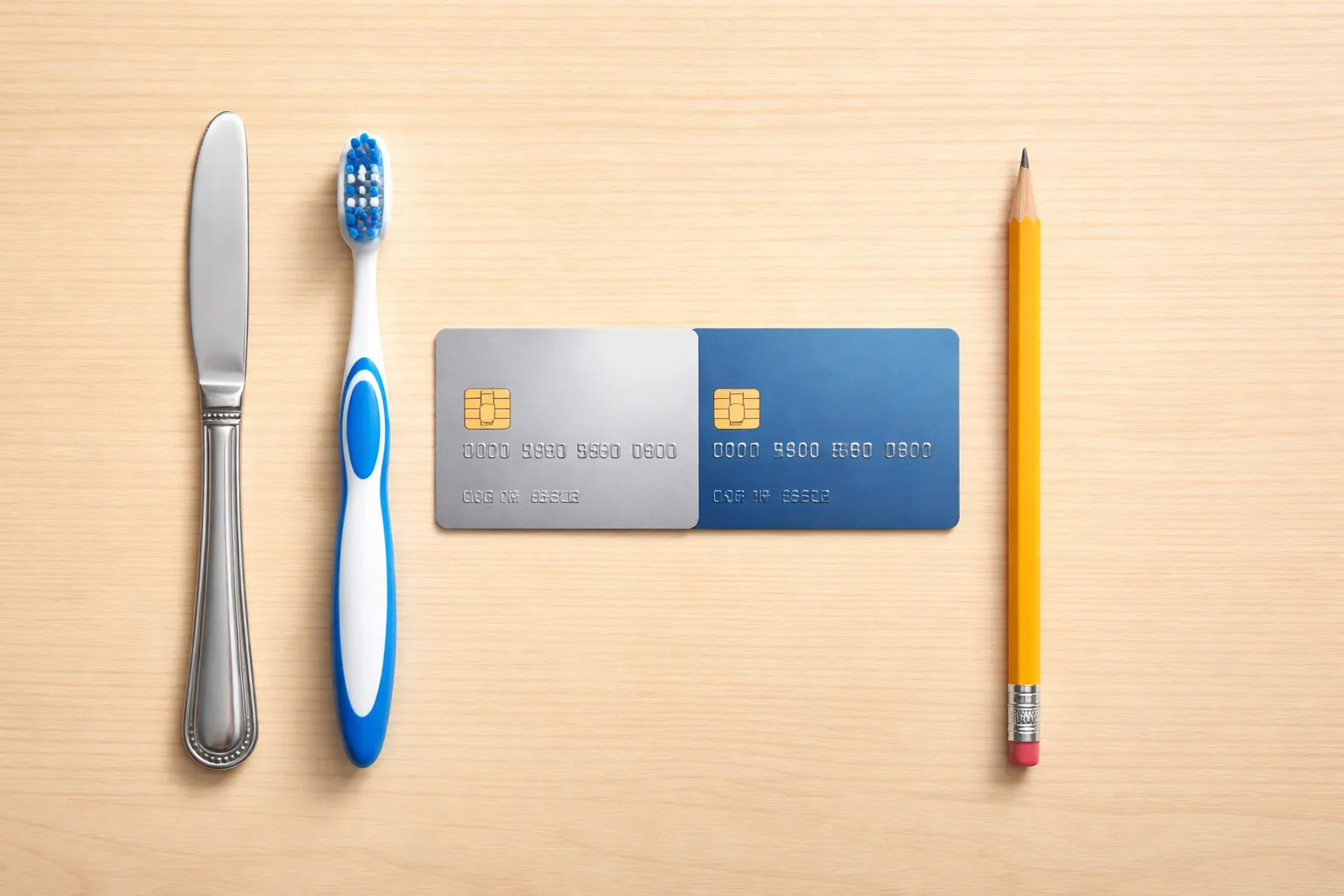
- Silverware Reference: Most standard butter knives in US kitchen sets are almost exactly 7 inches long.
- Wallet Hack: Placing two credit cards end to end provides a very close approximation of 6.75 inches.
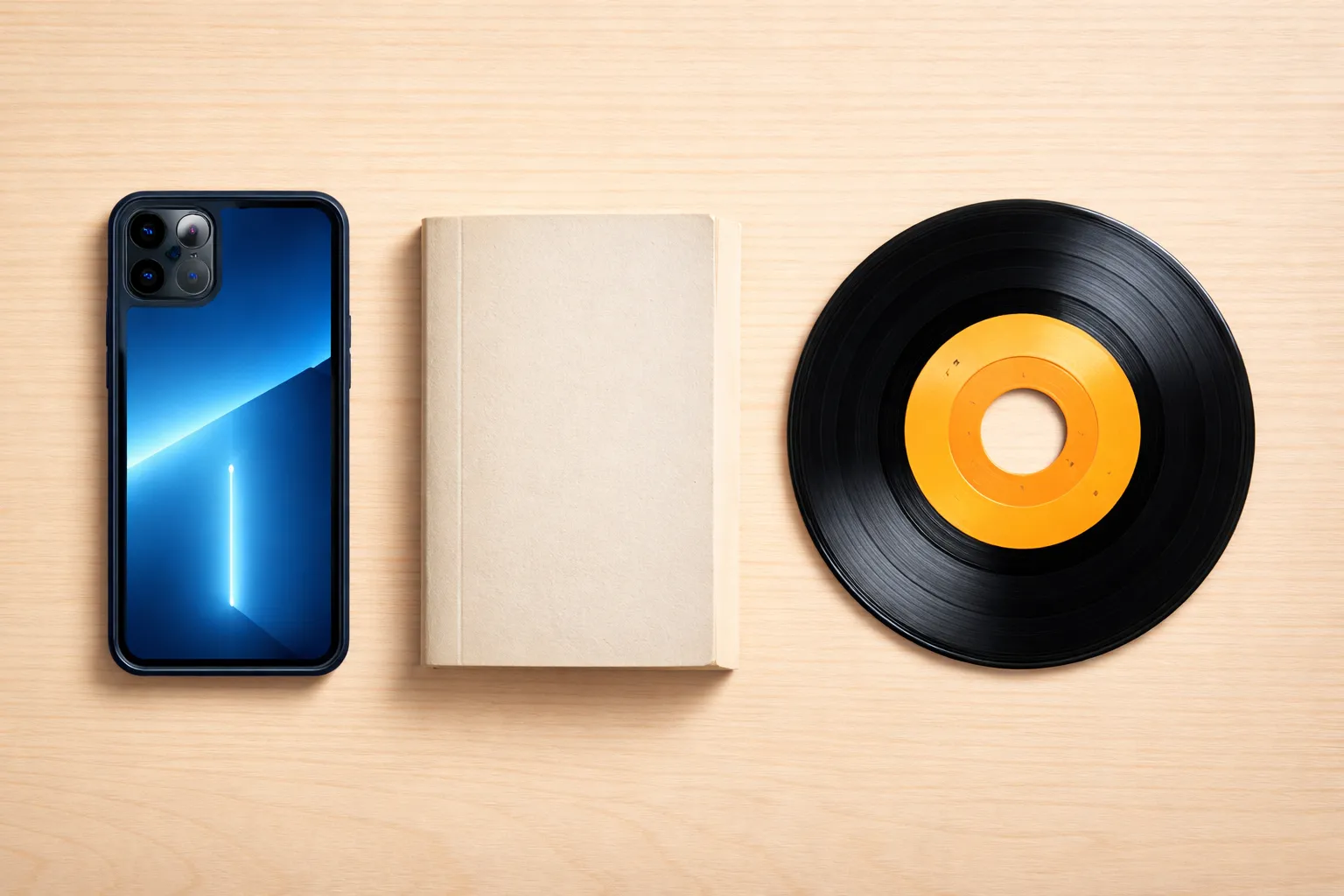
- Tech Scale: The height of a large smartphone inside a protective case often reaches the 7 inch mark.
- Music Standards: Classic 45 RPM vinyl records are a precise physical standard at exactly 7 inches in diameter.
Common Things That Are 7 Inches Long in Your Home
Standard Butter Knives
When I open my silverware drawer, the first object I reach for is a butter knife. Across multiple stainless steel sets I have measured, most butter knives fall very close to seven inches from tip to handle base.
This consistency makes them one of the most dependable household references. I regularly use one to estimate drawer depth, shelf spacing, or décor placement. Because nearly every home has at least one, it works as a shared reference point that requires no explanation.
Adult Manual Toothbrushes
A standard adult toothbrush typically measures between seven and eight inches. While electric toothbrushes vary widely, basic manual versions from pharmacies and dental offices are remarkably consistent.
Since toothbrushes are handled daily, they are easy to visualize even when one is not physically present. I often use that mental reference when estimating cabinet space or toiletry bag capacity.
Brand New Wooden Pencils
A new unsharpened pencil measures roughly seven and a half inches, including the eraser. While slightly longer than the target length, it provides a close approximation that works well for quick estimation.
Once a pencil has been sharpened several times, it becomes less reliable. However, fresh pencils remain useful for craft layouts, desk organization, and storage planning.
Everyday Objects Around 7 Inches for Quick Reference
Mass Market Paperback Books
Most mass market paperback books measure between 6.75 and 7 inches tall. These are the compact, thicker books commonly found in airports and grocery stores.
I frequently use them as vertical references when arranging shelves or planning small decorative placements. Because they are rigid and uniform, they offer a clearer sense of scale than flexible items.
Large Smartphones With Protective Cases
Many people wonder whether seven inches is longer than most smartphones. While screen sizes are measured diagonally, the physical height of large phones typically ranges from 6.3 to 6.7 inches. Once a protective case is added, many reach or slightly exceed seven inches.
Because phones are always nearby, they are one of the most practical substitutes for a ruler. I often use mine when checking clearances in hardware stores or storage aisles.
Seven Inch Vinyl Records
The classic 45 RPM vinyl record is exactly seven inches in diameter, a standardized size widely used for music singles throughout the twentieth century. This makes it one of the most precise and recognizable physical standards for this measurement.
Its circular shape also helps visualize the width of round objects like plates, lids, or bowls. Few objects offer such a consistent and memorable size reference.
Seven Inch Object Examples in the Kitchen and Office
Kitchen Utensils and Small Tools
Beyond butter knives, many kitchen tools fall close to this size. Several santoku knives feature seven-inch blades, which balance control and efficiency for everyday chopping. I use one regularly and find it easy to recall its length visually.
Small dessert plates and bread plates also commonly measure seven inches in diameter. These are useful when organizing cabinets or planning table layouts without pulling out measuring tools.
Compact Tablet Screens
Seven inches is a popular diagonal screen size for compact tablets. While the outer body may be slightly larger, the screen itself represents the measurement clearly.
This size remains popular because it bridges the gap between phones and full-sized tablets, offering portability without sacrificing readability.
Medium to Large Bananas
While nature is not exact, a medium to large banana often averages close to seven inches. Although the curve reduces straight-line accuracy slightly, it remains a widely understood visual reference.
Because bananas are universally recognizable, they are often used informally to communicate size, especially in photos or casual explanations.

How to Visualize 7 Inches Without a Ruler
Using Your Hand Span
For many adults, the distance between the tip of the thumb and the tip of the index finger when spread wide measures roughly 6.5 to 7.5 inches. Measuring your own hand once creates a personal reference you can use anywhere.
This technique works particularly well in stores, markets, or antique shops where measuring tools are unavailable.
The Credit Card Method
A standard credit card measures exactly 3.37 inches long. Placing two cards end to end gives a total of 6.74 inches, which is just shy of seven.
Because card dimensions are strictly regulated, this method is one of the most reliable everyday measurement tricks when precision matters.
Dollar Bill Comparison
A U.S. dollar bill measures 6.14 inches long according to official U.S. dollar bill dimensions, and adding approximately the width of an adult thumb brings the total very close to seven inches. Adding approximately the width of an adult thumb brings the total very close to seven inches.
I often use this method when estimating box sizes, envelopes, or packaging while shipping items.
🎥 How to Measure Inches Without a Ruler
This video demonstrates simple methods to visualize and estimate inch measurements using familiar everyday items, helping you understand how long seven inches really feels without a ruler.
Items That Measure Approximately 7 Inches by Category
Photo Prints and Frames
The 5 by 7 photo format has a long edge of exactly seven inches. Frames designed for this size provide a rigid rectangular reference that is easy to use.
I often use spare frames to test storage containers or mailers because they hold their shape better than paper.
Tools and Hardware
Many hand tools are intentionally designed around a seven-inch length for ergonomics. Pliers, wire cutters, and certain screwdrivers frequently fall into this range.
Knowing the length of a favorite tool effectively turns your toolbox into a collection of measurement references.
Real World Comparison Scenarios People Actually Use
When people search what is 7 inches long, they are often trying to solve a real decision in the moment. It might be checking if a product fits a drawer, estimating shipping size, or choosing between two items online. In these cases, exact measurement matters less than visual confidence. That is why comparison works better than memorizing numbers.
A useful approach is placing one known object beside another to judge scale. This comparison of 7 inch objects is especially effective when both items are familiar. For example, comparing a paperback book to a phone or a butter knife to a small tablet creates instant clarity without tools.
This method also explains why everyday objects around 7 inches appear so often in search results, especially when shoppers compare them with mid-sized references like things that are 5 inches long for drawer fit and storage planning. People want references they already own, not technical charts. The more familiar the object, the faster the brain understands the size.
How People Use Seven Inch References While Shopping

In Store Decision Making
In physical stores, shoppers rarely carry rulers. Instead, they rely on memory and object substitution. Knowing what items are about 7 inches long allows quick decisions when comparing storage bins, kitchen tools, or organizers.
I often use my phone or hand span to check whether something will fit a shelf or bag. This avoids guesswork and reduces returns. It also explains why examples of things that are 7 inches long are searched so frequently in the U.S.
Online Shopping and Product Images
Online buyers face a different challenge. Product photos can be misleading without scale. Shoppers often scan descriptions looking for familiar references like books, tools, or credit cards.
This is where examples of 7 inch everyday objects become valuable. Visualizing size using known items reduces hesitation and builds purchase confidence. It also prevents the common issue of ordering something that looks larger or smaller than expected.
Why Seven Inches Is a Popular Design Size
Manufacturers often choose seven inches intentionally. It fits comfortably in most adult hands, balances portability with usability, and works well across multiple product categories.
In kitchen design, this size allows control without bulk. In electronics, it provides screen space without sacrificing mobility. Even in photography, the 5 by 7 format remains popular because it is easy to display and store.
This design consistency explains why items that measure approximately 7 inches appear across tools, media, and household goods. The dimension solves practical problems while remaining intuitive for users.
When Estimation Is Better Than Exact Measurement
There are situations where precision is unnecessary. Choosing décor, planning layouts, or checking fit often only requires a close estimate. In these moments, knowing how to visualize 7 inches without a ruler is more useful than exact numbers, especially when you can mentally compare it to smaller references like things that are 1 inch long to better understand scale differences.
Using familiar objects speeds up decision making and reduces frustration. It also builds confidence over time as your estimation improves. This is why visual reference remains more powerful than memorizing conversions alone.
Visual Comparisons That Stick
Metric Conversion
Seven inches equals exactly 17.78 centimeters; using a quick unit conversion is especially useful when shopping internationally or reviewing technical specifications.
Memorizing this number helps avoid ordering items that are unexpectedly too large or too small.
Comparing Seven Inches to Other Units
Seven inches is approximately 0.58 feet, or slightly more than half a foot. Thinking of it as half a ruler plus a little extra makes it easier to visualize mentally.
This shortcut is useful when sketching layouts or planning quick DIY projects.
Examples of Seven Inch Measurements in Nature

Small Birds and Animals
Many small birds, such as robins and large sparrows, measure close to seven inches from head to tail. Observing them provides a living size reference.
This is also an effective way to teach children about scale using real-world examples.
Stones, Shells, and Driftwood
At beaches or riverbanks, stones and driftwood pieces often fall near the seven-inch range. These natural references are helpful when landscaping or gardening.
They also encourage better estimation skills by relying on visual judgment instead of exact measurement.
FAQs
1. How long is seven inches in centimeters?
Seven inches equals 17.78 centimeters, which is the standard metric conversion.
2. What common objects measure about seven inches?
Common examples include butter knives, adult toothbrushes, mass market paperback books, and seven-inch vinyl records.
3. How can I visualize seven inches at home?
Yes, You can use two credit cards placed end to end, a paperback book, or a standard photo frame as visual references.
4. Is seven inches longer than most smartphones?
Yes, Most large smartphones measure around 6.5 to 6.7 inches in physical height, making seven inches slightly longer.
5. Can everyday items replace a ruler?
Yes, Credit cards, dollar bills, your hand span, and phones all provide reliable size estimates for everyday use.
6. Why is seven inches considered a standard mid-size measurement in the U.S.?
Yes, seven inches is considered a standard mid-size measurement in the U.S. because it balances usability and portability across common household, consumer, and design products.
Final Thoughts
Once you learn to recognize things that are 7 inches long, estimating size becomes much easier. From kitchen tools to electronics and even natural objects, this measurement appears constantly in daily life.
By building mental references using familiar items, you turn your surroundings into a practical measurement toolkit. Whether you are organizing, shopping, or working on a quick project, these visual benchmarks help you make confident decisions without reaching for a ruler.