

In the realm of property development, construction, and acquisition, precision is non-negotiable. The art and science of determining and delineating land boundaries have been core to civilisation since ancient times. Today, the professionals tasked with these responsibilities are known as Land Surveyors. Serving as the nexus between law, land, and engineering, land surveyors play a critical role in property measurement, ensuring each parcel of land is accurately surveyed for various purposes.
Defining the Domain of Land Surveyors
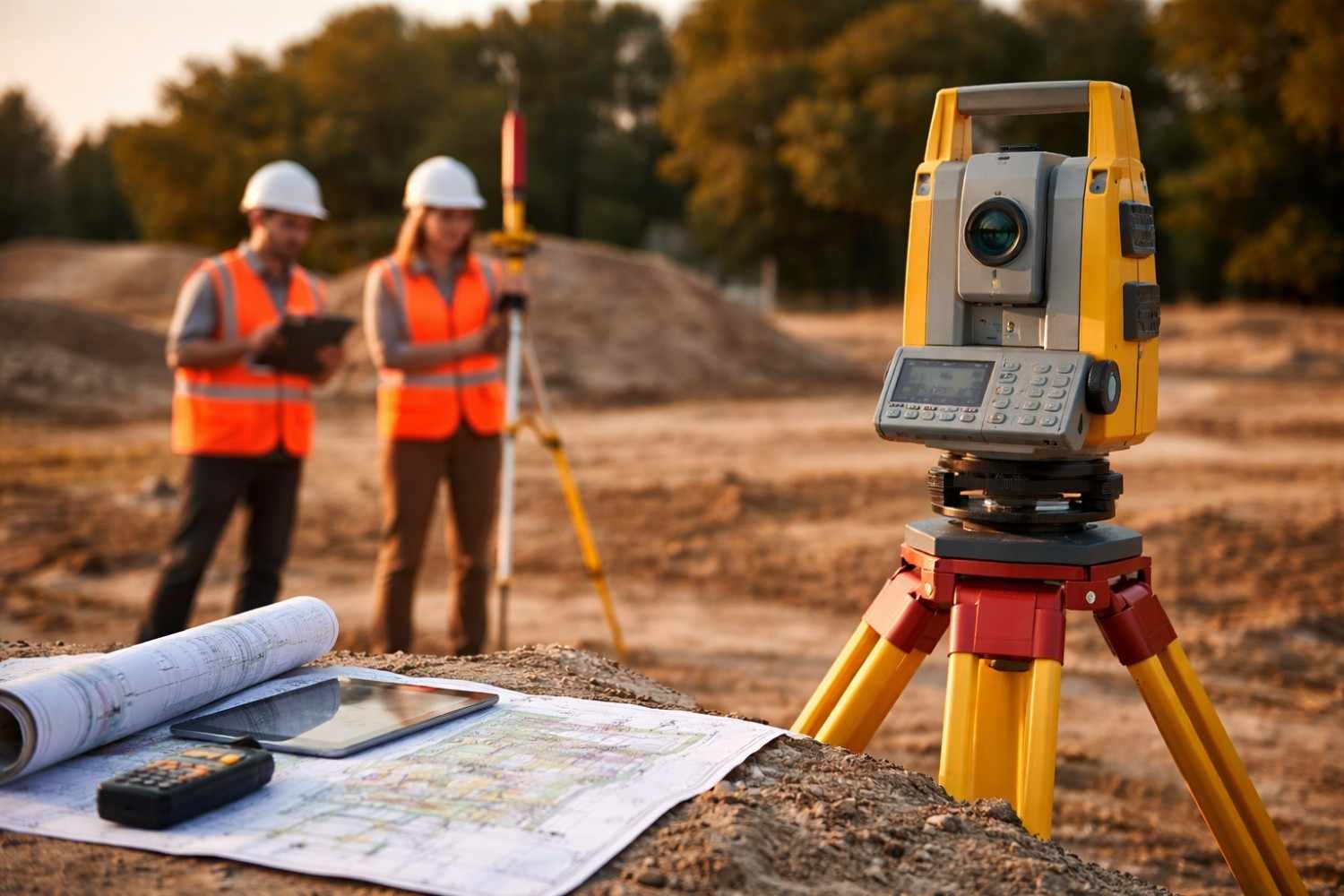
Land surveyors are experts in pinpointing the three-dimensional positions of points and the distances and angles between them. These skilled professionals use a combination of fieldwork and analysis to establish the topography of the surface, the location of features, and the boundaries of property lines. The work carried out by land surveyors ensures that legal boundaries are correctly determined and thereby facilitates the proper use and management of land.
The necessity of accurate land surveys cannot be overstated. These precise measurements are the foundation for property deeds, land maps, and real estate transactions. Without the diligent work of surveyors, the risk of disputes about land ownership, encroachments, or improper land use would significantly increase.
The Science and Technology of Surveying
Modern land surveyors rely heavily on cutting-edge technology to perform their work with the utmost accuracy. Advanced equipment such as theodolites, GPS devices, drones, laser scanning, and computer-aided design (CAD) systems enable surveyors to capture and analyse land data more efficiently than ever before. This technology allows for the creation of comprehensive digital maps and plans, which can be used by architects, engineers, and local governing bodies.
Surveying is both an art and a science. Land surveyors must interpret and use this technology to decide where legal land boundaries are situated. This requires a deep understanding of surveying laws and regulations, not to mention the skills needed to negotiate and resolve potential conflicts.
The Indispensable Role of Surveyors in Land Development

The involvement of land surveyors is vital throughout the lifecycle of any property development project, including in high traffic commercial areas. From initial concept to construction, surveyors offer insights that inform design decisions and ensure compliance with local planning regulations. Prior to construction, a land survey will identify any potential issues with the land, such as flood risk or subsidence, which will impact the planning and execution of the project.
In addition to informing the design and planning stages, surveyors also facilitate the practical aspects of construction by staking out reference points and markers that guide the construction of new structures. This precise alignment is essential to prevent costly and potentially hazardous mistakes during building.
Furthermore, land surveyors are instrumental in the delineation of land for subdivision, determining the grades and elevations of lots to guide the planning and improvement of roads and drainage. This is particularly important in the development of residential communities, where the layout of properties and infrastructure has a long-term impact on the community’s functionality and aesthetic appeal.
Surveying as a Legal Requirement
A robust legal component underpins the work of land surveyors; their surveys serve as legal documents and are used in the court system to resolve property disputes. When properties are bought and sold, a surveyor’s report can help define the precise dimensions and limitations of the property in question, thus avoiding future disagreements between neighbours or questions of land encroachment.
The legal dimensions of surveying also require these professionals to have a firm grasp of property laws and a meticulous approach to detail. When land is transferred or refinanced, especially, a land surveyor’s involvement is often legally mandated.
Enabling Environmental Conservation and Management

Surveying is not limited to urban projects; land surveyors also play a key role in environmental conservation and management. By mapping out natural features and resources, surveyors contribute to the protection and sustainable management of the environment. Their surveys can help delineate wetland boundaries or identify protected areas, help in the creation of environmental impact assessments, and aid in long-term planning for natural resource management.
To carry out this important role, surveyors must balance the need for development with environmental stewardship, ensuring that growth does not come at the expense of the land’s ecological well-being. The precision of their work is critical in maintaining the health of natural habitats and ecosystems.
Conclusion
The work of land surveyors is a cornerstone of property development and management. Their expertise ensures properties are correctly measured, boundaries are established with scientific precision, and land is used and developed in accordance with legal and planning requirements. In essence, surveyors shape the very ground we walk on, influencing the layout and legalities of our built and natural environments.
The crucial nature of their role cannot be underestimated. Whether it is for urban development, legal documentation, or environmental management, the Land Surveyors provide the critical data and analysis that underpin informed decisions. As guardians of geometric precision, they carry a legacy that is fundamental to the organisation and sustainability of our living spaces.